


6 Iconic product sampling ideas to inspire your campaign
Product sampling is one of the most powerful tools in a marketer’s toolkit. Done well, it does more than put a product in someone’s hands – it creates a moment. A real, tangible experience with a brand that no banner ad can replicate.
But with so many brands using sampling, the ones that really cut through tend to share something in common: a clear objective, a smart delivery mechanism, and a reason for the recipient to actually care.
Here are six campaigns that got it right – and what brands can learn from each of them.
1. Cadbury Secret Santa Postal Service
The objective
Christmas is the most competitive time of year for confectionery brands, with Cadbury’s rivals significantly increasing their spend year on year. Cadbury needed a campaign that could cut through the festive noise, grow market share, and do something genuinely different – not just another warm TV ad.
The format
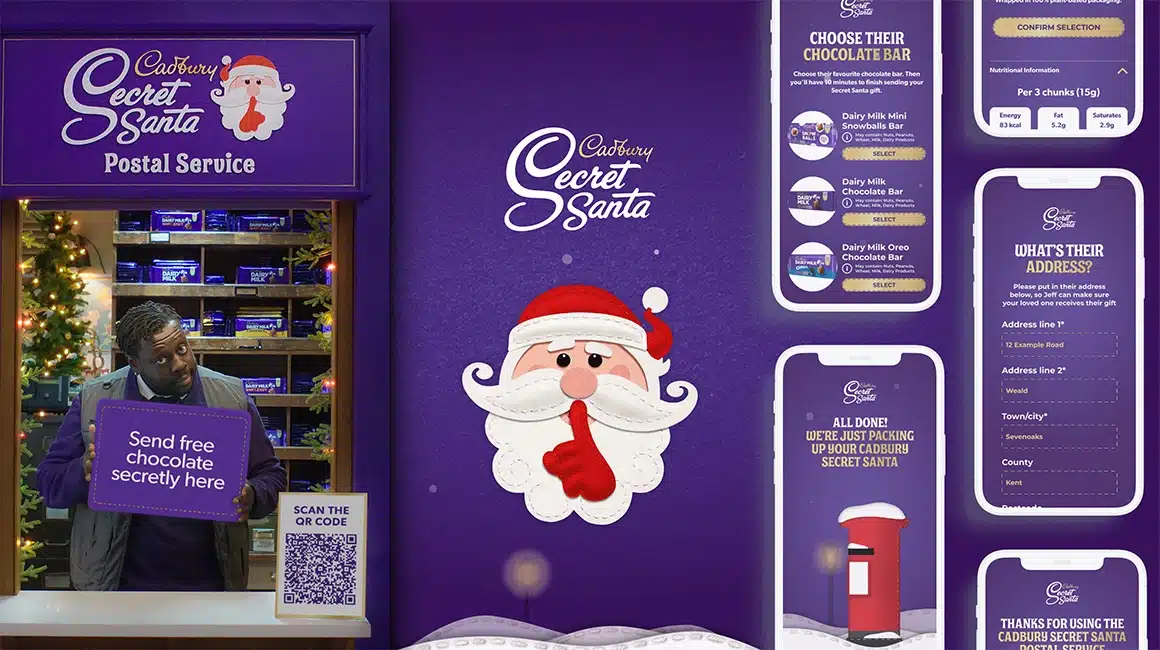
Rather than simply handing out samples, Cadbury turned their outdoor advertising into an interactive sampling mechanic. Over 280 digital and static posters appeared across the UK – at bus stops, train stations, shopping centres, and high streets (“OOH” – “Out-of-Home” advertising) – each featuring a QR code. Scanning the code brought up a mobile experience where you could anonymously send a free Cadbury chocolate bar to someone special, delivered to their door by Royal Mail.
The character of Jeff the Postie tied together everything from the TV ad to the OOH placements, making the campaign instantly recognisable wherever people encountered it. 120,000 free bars were released gradually across the six-week run-up to Christmas Eve, creating a sense of scarcity and excitement.
Why it worked
Cadbury tapped into something genuinely emotional – anonymous generosity – at a time of year when people are already primed for it. The campaign turned a passive media format (a poster) into an active, participatory experience. It also generated substantial first-party data, with almost half of senders opting in to future marketing communications.
Kantar named it the most effective Christmas ad of 2022, rating it highest for branding, meaningfulness, and long-term brand-building potential. When the same TV ad ran again in 2023, it outperformed the previous year.
The results
- 278,643 QR code scans in year one
- 149,789 free chocolate bars sent
- 3 million+ campaign participants since launch
- 43% increase in annual Cadbury Christmas sales
- £80 million in additional revenue generated
Key takeaway
Sampling doesn’t have to mean a stranger handing you something on the high street. Cadbury used gifting as a mechanic – making the act of sharing a sample feel meaningful and personal. If your product is suited to it, building an emotional moment around the trial can dramatically amplify its impact.
2. Oatly: Taste Wins Blindly
The objective
Despite being the UK’s leading oat drink brand with 73% brand awareness among milk alternative drinkers, Oatly faced a stubborn problem: many consumers who’d never tried oat milk assumed they wouldn’t like it. A blind taste test commissioned by Oatly suggested that up to four times as many people prefer oat milk in coffee when they don’t know it’s oat milk. The campaign set out to prove it.
The format
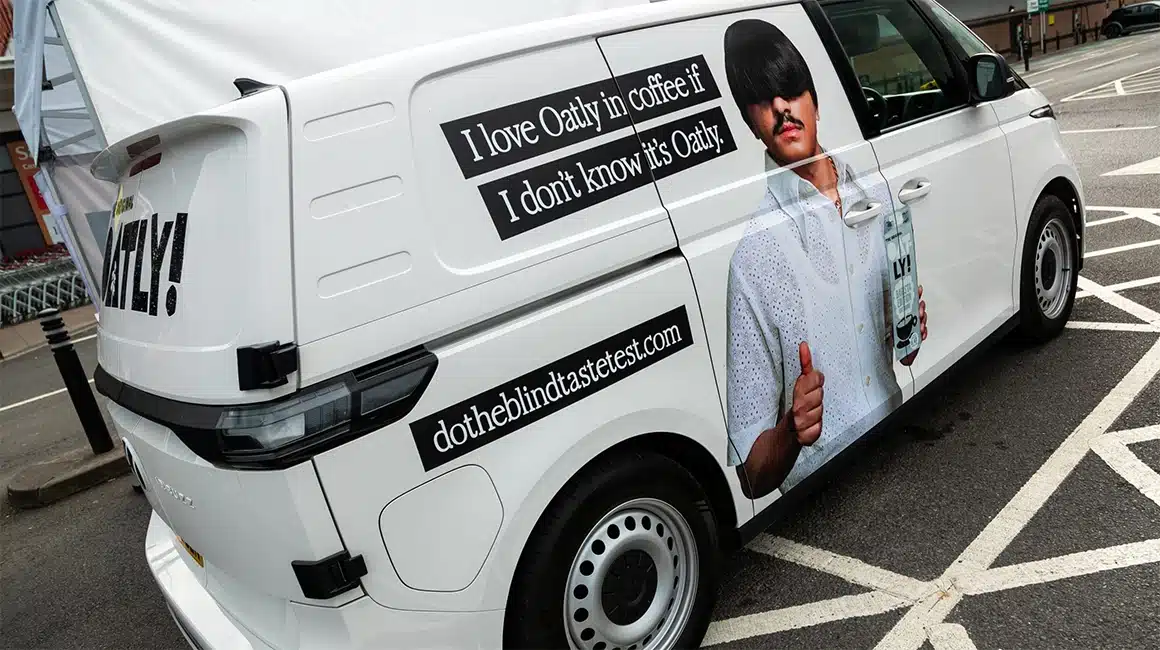
Oatly launched their biggest-ever UK sampling tour in spring 2025, travelling to Bristol, Birmingham, Edinburgh, Leeds and Glasgow in a zero-emissions van, handing out free barista-made oat milk flat whites to passers-by. Alongside the tour, they partnered with London coffee brand Grind to give away hundreds of free oat coffees across 14 locations over five days per city. A breakfast event at Grind’s Shoreditch café with NTS Radio added a cultural moment to the activation.
The sampling activity was supported by bold OOH advertising that cheekily stated people love Oatly “when they don’t know it’s Oatly”, alongside digital, social and connected TV placements on Netflix, ITVX and Channel 4.
Why it worked
The campaign turned a consumer insight into a sampling strategy. Rather than simply offering people a free drink, Oatly framed the trial as a genuine experiment – with the OOH creative providing the context for why people should seek out the samples. The physical experience and the advertising campaign worked together to reinforce the same message.
Running the tour in an electric vehicle also aligned the sampling format with the brand’s broader sustainability positioning – the execution was as much on-brand as the product itself.
The results
- 8,000+ free coffees served across five UK cities
- OOH reach connecting with 24% of the target audience
- Over 115 million digital impressions, exceeding forecast by 29%
Key takeaway
If your brand is up against consumer scepticism or habitual purchasing behaviour, sampling is a uniquely powerful tool because it bypasses the decision-making process entirely. Oatly made the trial itself the campaign story, giving people a reason to seek it out rather than passively receiving it.
3. Cheerios: Hacking Prime Day
The objective
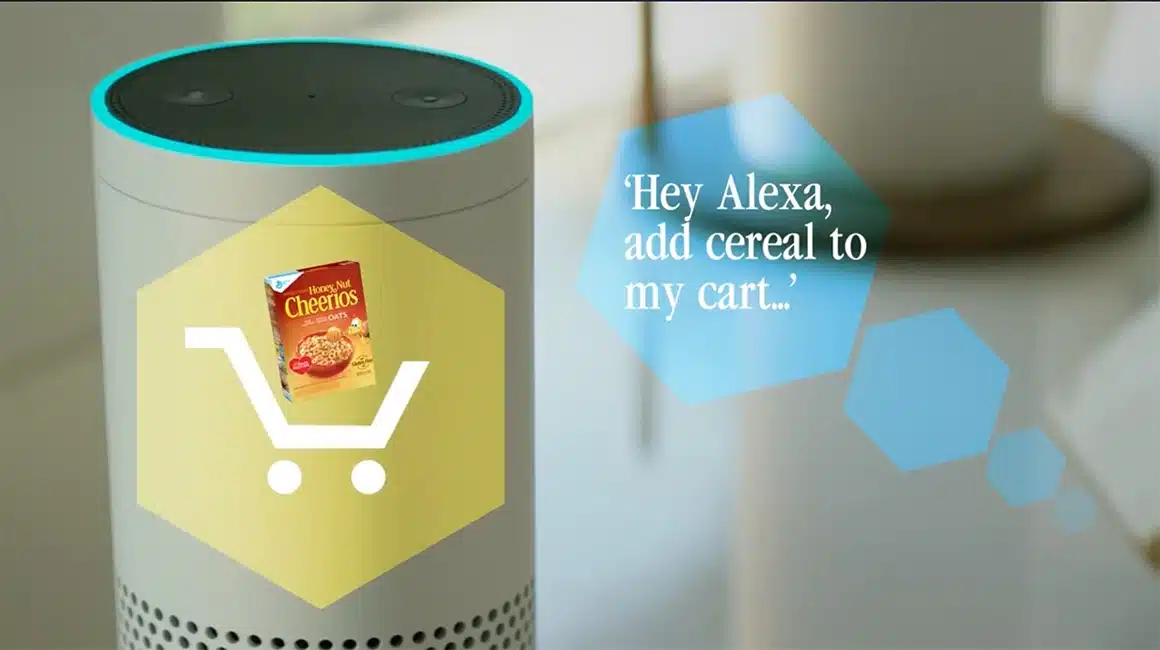
By 2018, voice shopping via Amazon’s Alexa was growing rapidly. The challenge for Cheerios was that Alexa tends to recommend products a shopper has previously purchased – meaning brands with no history in a customer’s account were effectively invisible. With Amazon Prime Day approaching, Cheerios saw a window to establish themselves as Alexa’s default cereal recommendation.
The format
Cheerios offered a free family-size box of Honey Nut Cheerios to any Amazon shopper who spent more than $40 during Prime Day. The offer was promoted through Amazon’s homepage, checkout screens, live stream shopping channel, and banner ads – ensuring broad visibility across the platform on its single biggest shopping day.
The mechanism was elegantly simple: millions of shoppers accepted the free box, which created a Cheerios purchase history in their Amazon account. From that point on, when they asked Alexa to “add cereal to my cart”, Cheerios was the recommended option.
Why it worked
What looked like a promotional giveaway was actually a strategic play to game an algorithm. Cheerios understood how Alexa’s recommendation system worked and designed a sampling campaign that created long-term ‘incidental loyalty’ – the idea that consumers who let a digital assistant make purchasing decisions will repeatedly revert to whatever it suggests. One campaign created a compounding advantage that extended well beyond Prime Day itself.
The results
- Honey Nut Cheerios became the No.1 grocery item on Amazon Prime Day
- 64% year-on-year sales uplift compared to the prior week
- 80% of July purchasers were new to the brand
Key takeaway
Sampling doesn’t have to be about the immediate trial. Cheerios used their giveaway to influence the infrastructure of future purchasing decisions. When planning a sampling campaign, it’s worth asking not just “what happens when someone tries this?” but “what happens the next three times they go to buy it?”
4. Aperol: Lockdown Cocktail Kits
The objective
In December 2020, with hospitality venues closed due to COVID restrictions, Aperol faced a direct challenge: how do you drive trial of a product that’s almost exclusively consumed at bars and restaurants, when those venues are shut? The answer was to bring the spritz experience directly to consumers’ doors.The format
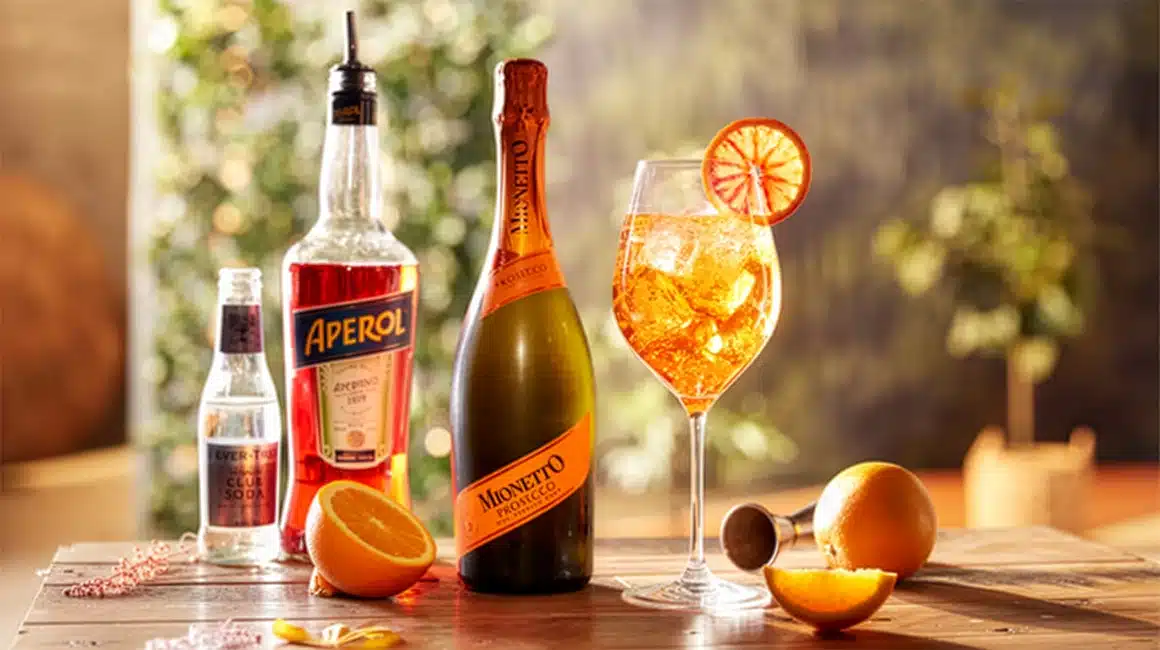
Facilitated by Relish, Aperol partnered with takeaway delivery partners across the London and Manchester areas to place cocktail kits directly into food orders. Each kit included two Aperol miniatures, a Fever-Tree soda, and a Mionetto Prosecco – everything needed to make an Aperol Spritz at home. The sampling happened at the precise moment people were already thinking about drinking: when their takeaway arrived.Why it worked
Rather than sampling the product in isolation, Aperol sampled the full occasion. Receiving a complete cocktail kit is a very different experience from receiving a miniature bottle of something you don’t know what to do with. By including everything needed for the serve, Aperol could replicate the bar experience in a way that felt considered and generous, rather than promotional. The delivery context also mattered. Takeaway orders have an inherent warmth to them – people are relaxed, they’re at home, and they’re in the mood to enjoy themselves. It’s an unusually receptive moment for a drinks brand to show up.The results
- 40,000 cocktail kits distributed across 300 restaurants
- 33,102 direct recipients reached in the London and Manchester areas
Key takeaway
Think about the full experience your sample creates, not just the product itself. Aperol didn’t just sample a drink – they sampled an occasion. If your product is best understood in context, it’s worth investing in delivering that context alongside it.5. Dove: The ‘Would You Switch?’ Trial
The objective
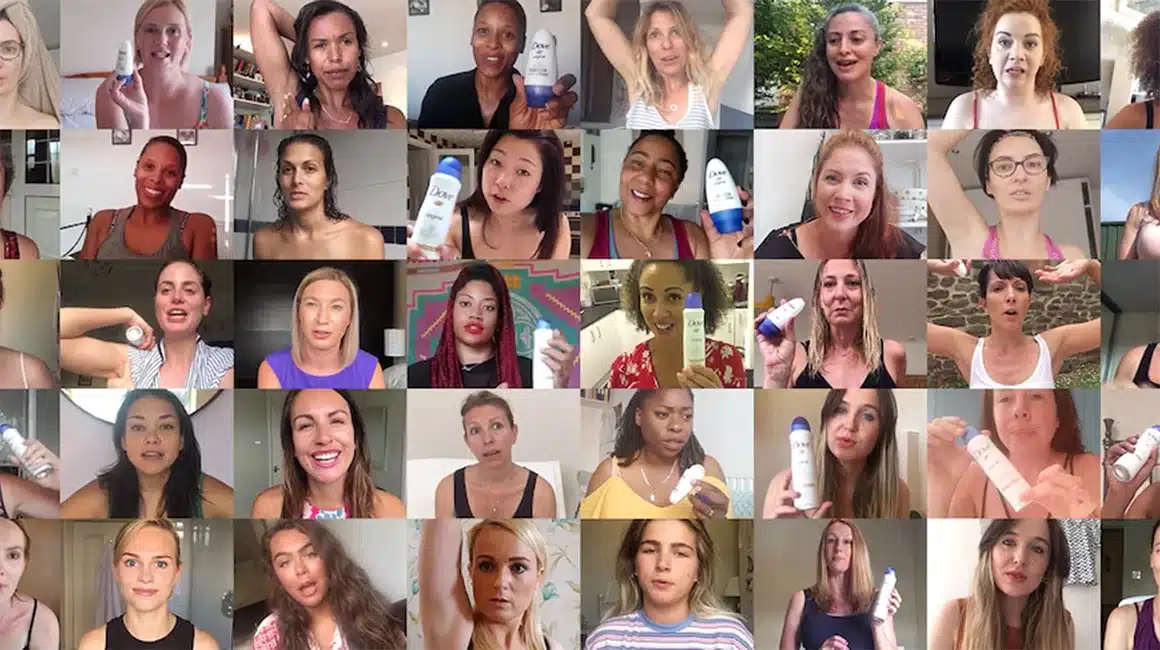
Deodorant is one of the most habitual purchase categories in personal care – once someone settles on a brand, they rarely switch. Dove wanted to break that habit by getting their antiperspirant into the hands of non-Dove users and letting the product make the case for itself.
The format
Dove ran their biggest-ever global trial, recruiting hundreds of non-Dove users worldwide to commit to a seven-day test run with Dove Antiperspirant. Participants were asked to keep daily video diaries throughout, recording their honest experiences with the product. At the end of the week, one question: would you switch?
The user-generated content from the diaries became part of the campaign itself – real consumers explaining in their own words why they’d switch brands, which is considerably more persuasive than a polished ad.
Why it worked
Dove understood that in a sceptical category, trial alone isn’t enough – you also need social proof. The campaign was designed so the sampling generated its own marketing material. The video diaries created authentic advocacy that was more trustworthy than anything Dove could have scripted, and the structured commitment of a seven-day trial meant participants were genuinely engaged with the product rather than using a sample once and forgetting it.
The results
- 89% of UK trial participants said they would switch to Dove after seven days of use
Key takeaway
In categories where brand loyalty is strong, a short-lived sample might not be enough to shift behaviour. Building in a longer, more structured trial period – and capturing genuine feedback throughout – gives the product more time to prove itself and gives you marketing content in the process.
6. Beefeater Gin x Fever-Tree: In-Store Sampling at Scale
The objective
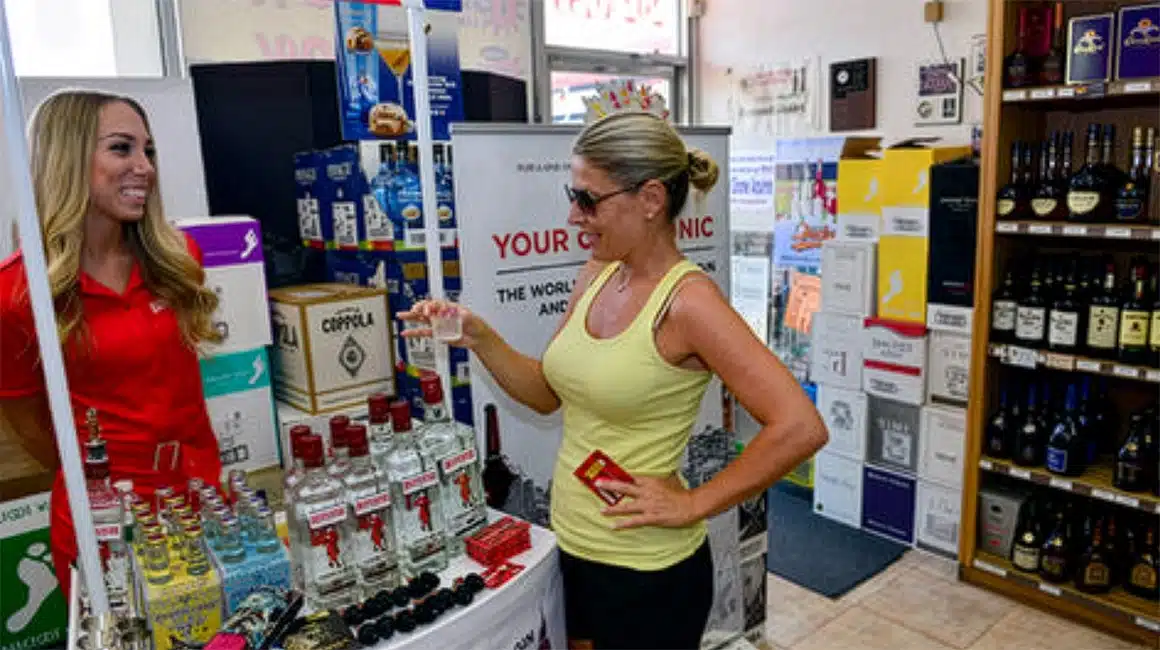
Beefeater Gin wanted to raise awareness of their brand and drive in-store sales across multiple international markets. In a premium spirits category where point-of-purchase decisions are significant, they needed a way to engage shoppers at the moment of decision and give them a reason to choose Beefeater over the competition.
The format
Beefeater organised over 2,000 in-store sampling events across 16 national markets, pairing Beefeater Gin with Fever-Tree Tonic Water to offer free G&T samples to shoppers. Brand ambassadors educated consumers about the product’s history and awards, turning each activation into a mini brand experience rather than a simple giveaway. Running the sampling in partnership with Fever-Tree also added credibility – the combination positioned Beefeater within the premium mixer category where Fever-Tree already had strong brand equity.
Why it worked
The partnership mechanic was central to the campaign’s success. By sampling Beefeater alongside Fever-Tree – a brand consumers already trust and seek out – the campaign borrowed credibility and helped consumers understand how and when to drink Beefeater. The in-store context also meant sampling happened precisely where and when people were making purchasing decisions.
The results
- 19.5% increase in Beefeater sales across the campaign period
- 26,600+ bottles sold
- Average of more than 4 bottles sold per activation hour
Key takeaway
A complementary brand partner can significantly strengthen a sampling campaign. Beefeater didn’t just get more resources by collaborating with Fever-Tree – they got a stronger product story and a halo effect from an already-trusted brand. It’s worth asking whether there’s a natural partner brand that could add context and credibility to your next campaign.
What makes a product sampling campaign truly iconic?
Looking across these six campaigns, a few things consistently stand out.
The best sampling campaigns have a clear, specific objective – not just “drive awareness”, but a defined problem they’re trying to solve: breaking purchase habits, hacking an algorithm, reaching an audience you can’t access through traditional channels, or recreating an experience that’s been disrupted. That objective shapes everything else.
They also think beyond the product itself. Cadbury sampled generosity. Aperol sampled an occasion. Oatly sampled a belief. In each case, the product was the mechanism, not the whole story.
And they choose their moment carefully. Whether it’s Amazon Prime Day, a takeaway delivery, a high-footfall city centre, or a seven-day commitment – the context in which someone receives a sample has a huge bearing on how they engage with it.
If you’re thinking about how product sampling could work for your brand, Relish can help. We’ve run campaigns across every channel – in-store, through takeaway delivery, via subscription boxes, at events, and more – and we’d love to help you find the right approach.
Get in touch at team@relishagency.com or call 01173751160 to start the conversation.


