Skip to content

What Is Brand Activation?
A Complete Guide with Examples
You’ve built a brand. You know what it stands for. But knowing something and making other people feel it – that’s a different challenge altogether. That’s what brand activation is for.
Brand activation is the process of bringing your brand to life through experiences, campaigns, and touchpoints that create a real, emotional connection with your audience. It’s less about telling people who you are, and more about showing them – in a way that sticks.
Done well, brand activation turns passive awareness into active loyalty. It’s the difference between someone who recognises your logo and someone who genuinely champions your brand.
In this guide, we’ll cover what brand activation actually means, the different types, what makes them work, and some of the best examples around.
What is Brand Activation?
Brand activation is a marketing approach focused on creating direct, meaningful interactions between your brand and your target audience. Rather than simply broadcasting a message, activation invites people to experience your brand firsthand – whether that’s through trying your product, attending an event, participating in a campaign, or encountering something unexpected that leaves a lasting impression.
It’s worth separating it from broader brand building, which is the ongoing work of shaping how people perceive you over time. Brand activation tends to be more targeted and moment-driven: a specific campaign, event, or experience with a clear goal in mind.
That goal might be: generating trial, driving social buzz, launching a new product, re-engaging lapsed customers, or simply making your brand feel relevant to a new audience.
Brand activation = the moment your brand stops being something people are aware of, and starts being something they’ve experienced.
Why does brand activation matter?
Awareness is cheap. Almost every brand can achieve a degree of awareness with enough media spend. What’s harder – and more valuable – is getting people to actually engage with you, trust you, and choose you over the competition.
Brand activation matters because it builds that deeper layer of connection. A study by EventTrack found that 74% of consumers say engaging with branded event marketing experiences makes them more likely to buy the promoted product. A separate piece of research by Nielsen found that experiential marketing generates a higher return on investment than traditional advertising for most FMCG categories.
For brands in competitive markets – beauty, food and drink, health and wellness – activation is often what tips the scales. When consumers can try something before they commit, the barrier to purchase drops dramatically.
Thinking about activating your brand? Get in touch with the Relish team.
What makes a brand activation work?
Before you decide what type of activation to run, it helps to understand what separates the ones that land from the ones that don’t. There are a handful of things every effective activation has in common.
A clear brand identity to activate from
This sounds obvious, but it’s where a lot of activations go wrong. You can’t create an experience that feels authentically ‘you’ if you haven’t established what ‘you’ actually means.
Your brand values are your principles – what you stand for, and what you won’t compromise on. Your mission is the bigger purpose behind what you do – why your brand exists beyond making money. Your USPs are what make you different from your competitors – the specific things that give people a reason to choose you.
All three need to be clear before you start planning an activation, because the best activations are essentially a physical or digital expression of all three at once.
A specific audience in mind
The broader your target audience, the harder it is to create something that genuinely resonates. The best brand activations feel like they were designed for a very specific type of person – because they were.
Before you start, you should know: who exactly are you trying to reach? Where do they spend their time? What do they care about? What would make them stop, take notice, and actually engage? The answers to those questions should shape every decision you make about format, location, messaging, and timing.
An experience worth having
Brand activation works because experience is more memorable than advertising. People remember how things made them feel. So the experience you create needs to be genuinely good – not just functional, but enjoyable, surprising, or useful enough that people want to tell someone else about it.
This doesn’t mean it has to be spectacular. Some of the most effective activations are beautifully simple – a well-targeted product sample, a perfectly timed campaign, or an in-store moment that feels unexpectedly personal.
Consistency with your wider brand
An activation that feels disconnected from the rest of your marketing is a wasted opportunity – and can actually confuse people. The tone, visual identity, and messaging of your activation should feel like an extension of your brand, not a separate thing that happens to share your logo.
Consistency builds recognition and trust. Every time someone encounters your brand and it feels coherent, you’re reinforcing the impression you want to create.
Clear goals and a way to measure them
What does success look like? The answer will shape everything about how you run your activation. If you’re trying to generate trial, you’ll measure redemption rates and post-trial conversion. If you’re trying to build social buzz, you’ll track reach, shares, and UGC. If the goal is footfall or sales uplift, you’ll be looking at week-on-week numbers.
The mistake is treating activation as something you do and then review vaguely. Set your KPIs before you start, and make sure your activation is designed to capture the data you need to measure them
Types of brand activation
There’s no single right way to activate a brand. The best approach depends on your product, your audience, your goals, and your budget. Here are the main types – and what each one does well.
Product sampling
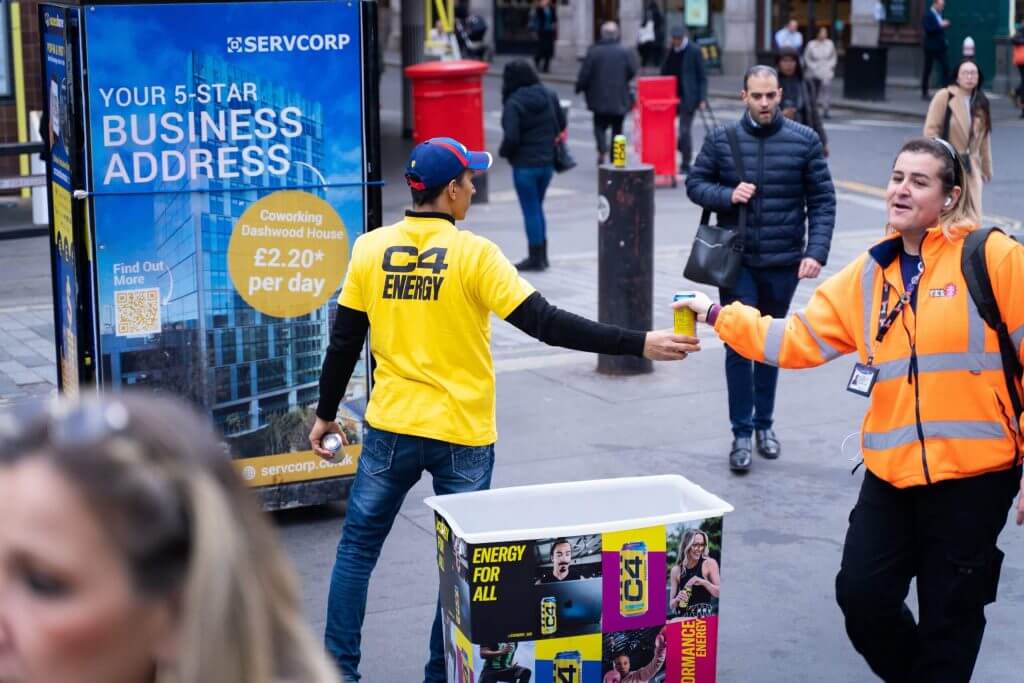
Product sampling is one of the most powerful forms of brand activation available, particularly for FMCG, beauty, food and drink, and health and wellness brands. The logic is simple: letting someone try your product removes the risk from the purchase decision. Instead of asking them to trust you, you’re giving them direct evidence.
Sampling can happen in a number of ways: in-store, at events, through the post, via digital claim-and-redeem campaigns, or through carefully chosen partner channels. Each has its strengths – in-store sampling drives immediate purchase consideration, while in-home sampling gives consumers time to properly evaluate your product in a relevant context.
The real value of sampling isn’t just trial – it’s the data and feedback you can capture alongside it. A well-run sampling campaign tells you exactly who tried your product, how they responded, and whether they went on to buy.

Experiential marketing
Experiential marketing – sometimes called event marketing or engagement marketing – is about creating an immersive, in-person experience that connects people with your brand. This could be a pop-up, a live event, an interactive installation, or a product demonstration designed to engage all the senses.
What makes experiential marketing effective is that it’s participatory. People don’t just watch – they interact, explore, and form memories. Those memories create an emotional association with your brand that traditional advertising struggles to match.
It’s also inherently social. A genuinely memorable brand experience gets photographed, shared, and talked about – extending your reach far beyond the people who were physically there.
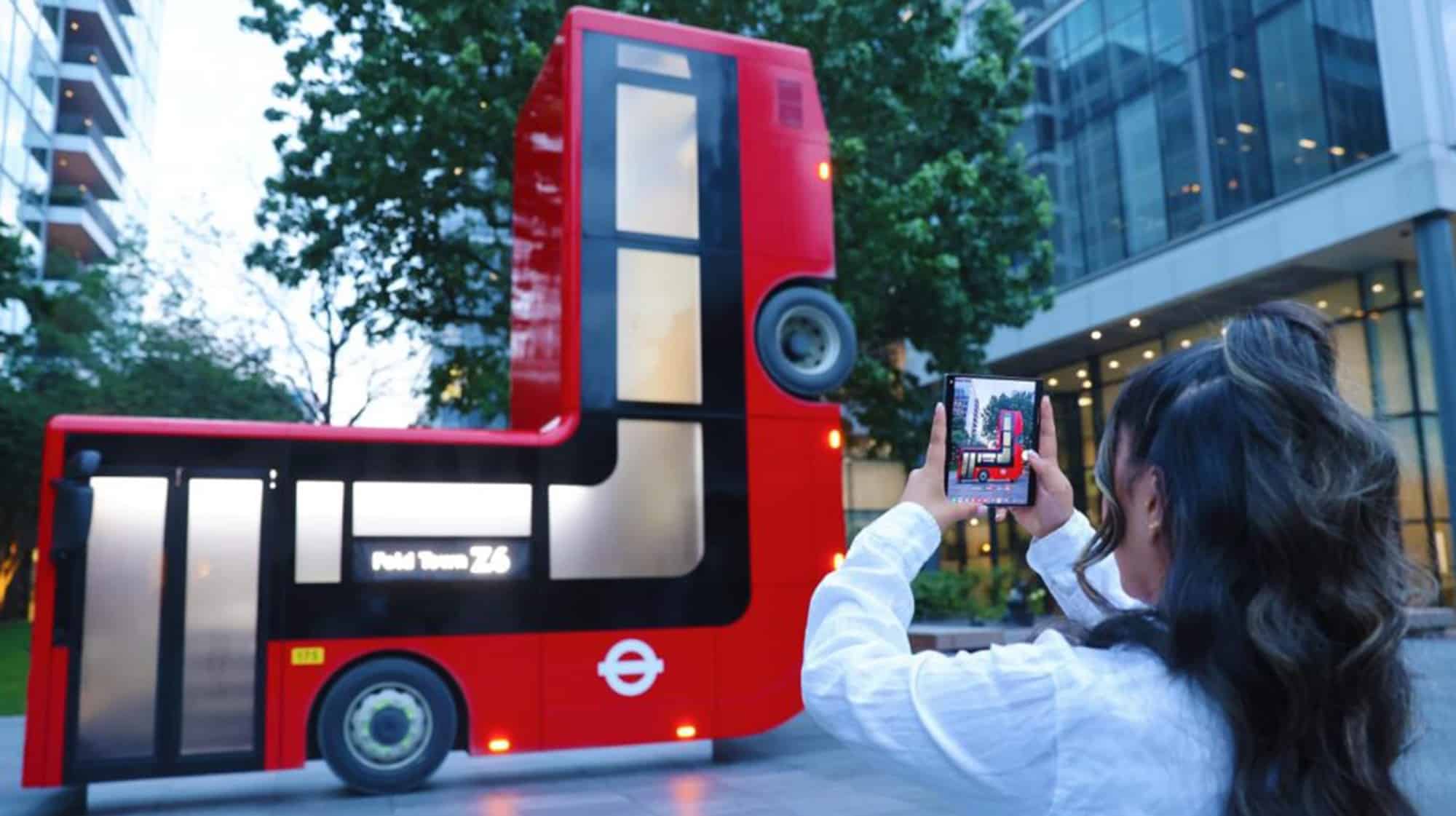
To launch the Galaxy Z Fold6, Samsung folded a full-sized London bus at a 90-degree angle in East London, renamed Old Street station “Fold Street” in partnership with TfL, and filled the surrounding streets with folded phone boxes, benches, and lampposts. The installations ran for four days and generated press coverage worldwide – the stunt itself became the story.
Digital Activation
Digital activation covers any brand activation that lives online – social media campaigns, interactive digital experiences, user-generated content campaigns, branded apps, digital sampling, and more.
The main advantage of digital activation is scale and measurability. You can reach enormous audiences, target them precisely, and track engagement in real time. The challenge is cutting through: the digital space is noisy, and attention is hard to earn.
The most effective digital activations tend to give people a reason to participate, not just watch. Challenges, competitions, and shareable moments that reward engagement tend to outperform purely broadcast approaches.
M&S cast reality TV stars Mark Wright and Spencer Matthews as menswear ambassadors and let the name do the heavy lifting. The campaign racked up 12 million views, a quarter of a million likes, and over 25,000 clicks to the M&S website – and sparked a chain reaction of copycat posts from Matalan, John Lewis, Primark, and more, all scrambling to find their own name-matched colleagues.

Influencer partnerships
Influencer marketing works as brand activation when it’s built around genuine product experience rather than just paid promotion. The distinction matters: an influencer posting a script is advertising. An influencer genuinely using and responding to your product – ideally over time – is activation.
The most effective influencer activations tend to involve a relatively small number of well-matched creators, given enough time and access to form a real opinion. Micro-influencers (those with 10,000–100,000 followers) often outperform larger accounts for brand activation purposes because their audiences are more engaged and their recommendations feel more personal.

Cause marketing
Cause marketing involves aligning your brand with a social, environmental, or community cause – and making that alignment central to your activation. It works because modern consumers, particularly younger demographics, increasingly factor a brand’s values into their purchasing decisions.
Done well, cause marketing creates a powerful emotional connection. Done badly – particularly when the link between the brand and the cause feels forced or performative – it can backfire badly.
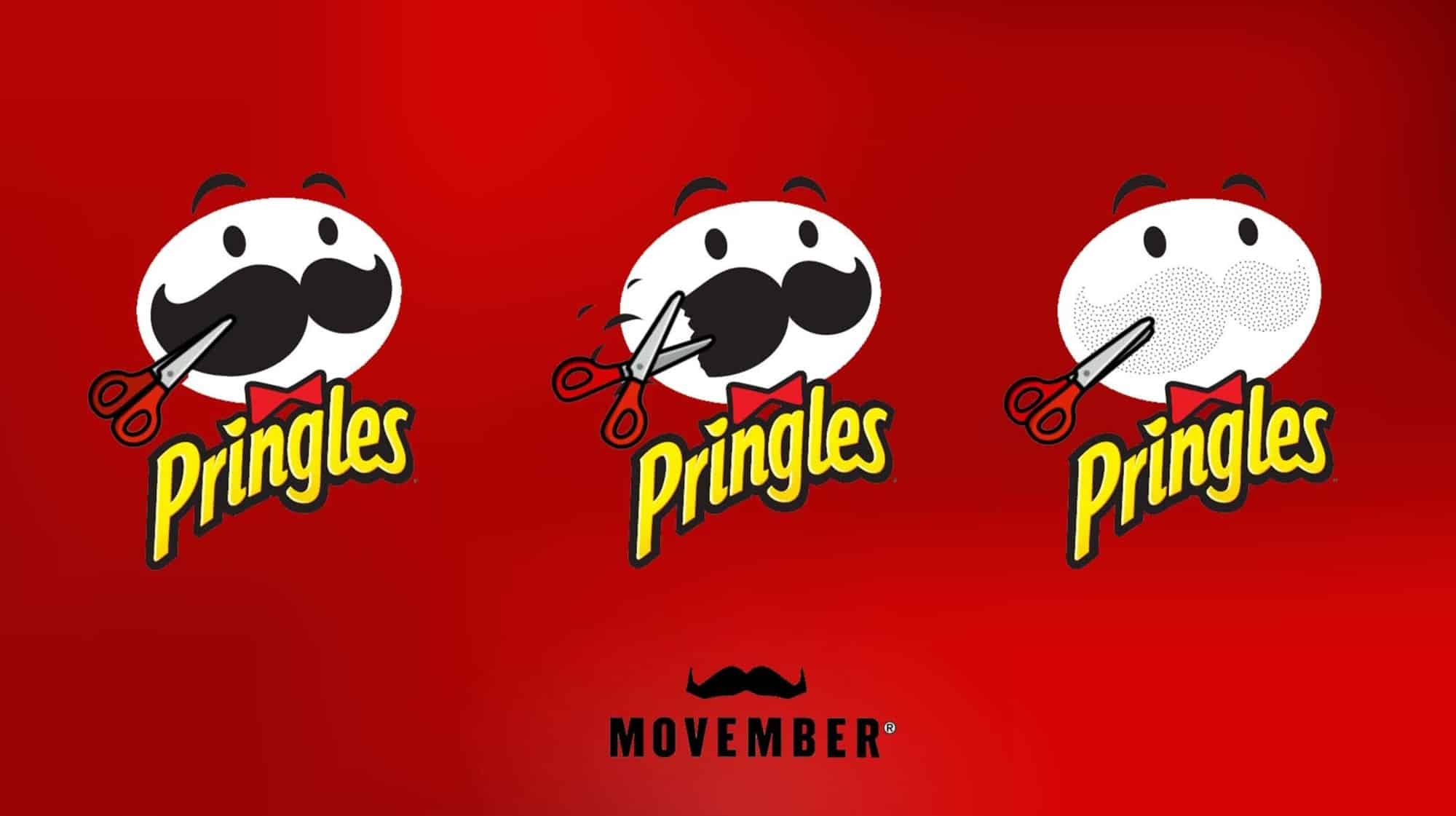
Pringles replaced Mr P’s iconic moustache with a QR code linking shoppers to Movember’s mental health conversation tool. The campaign generated over 118,000 scans and thousands of completed conversations, contributing to over £1 million raised for Movember across Europe. The partnership works because it’s genuinely integrated – the cause fits the brand, not just the calendar.
Brand activation examples worth knowing
Specsavers – The Edinburgh Bollard
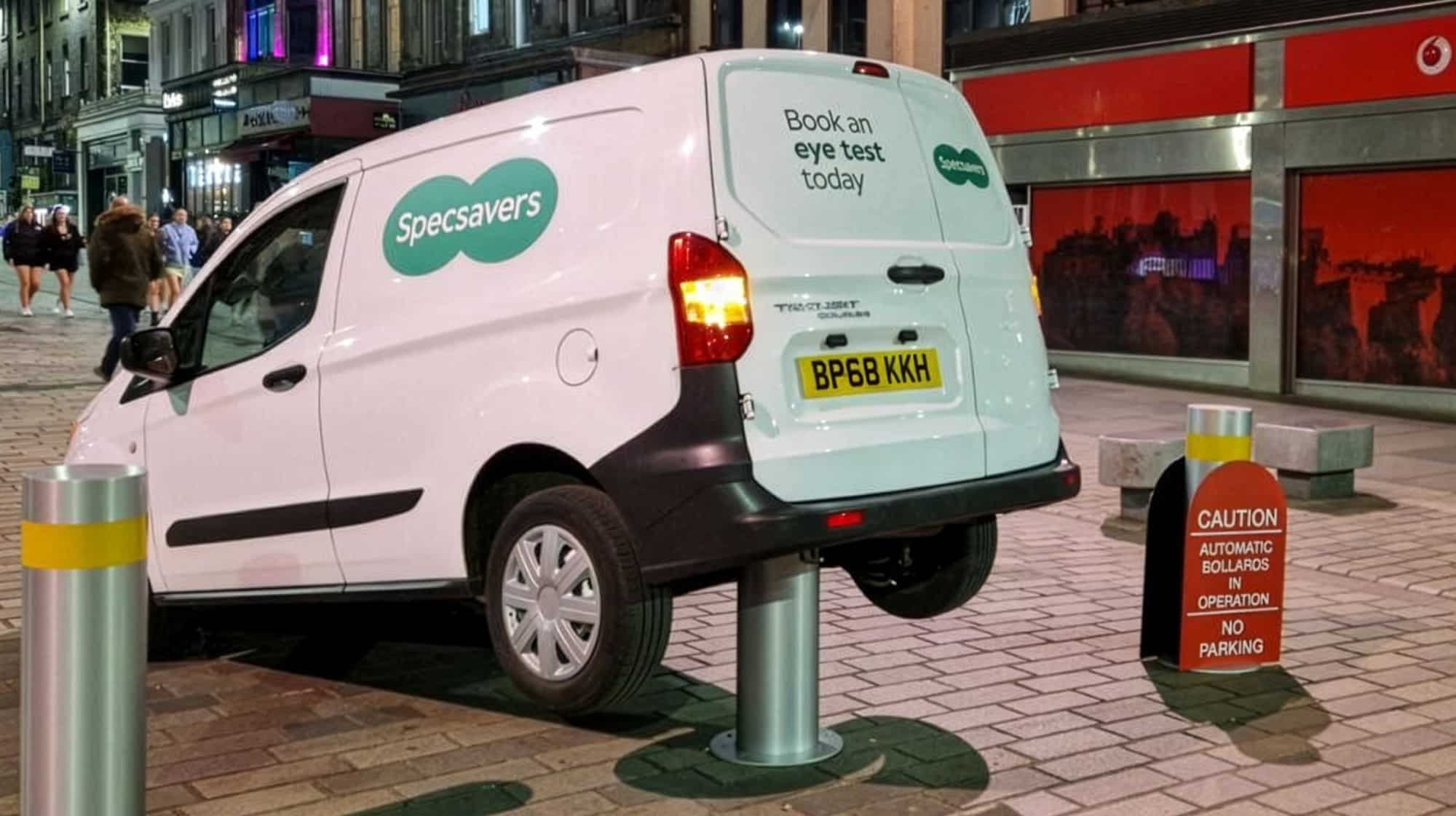
What it was: A Specsavers-branded van, appearing to have driven straight onto a rising bollard on Edinburgh’s Castle Street – right next to the warning sign it had evidently ignored.
How it worked: The stunt was planned months in advance. Specsavers worked with OOH agency Grand Visual to source a written-off van, build custom bollards, and install the whole thing overnight. It looked entirely real. Passers-by filmed it, the World Bollard Association called it “magnificent”, and it was covered by 20 online news outlets and ITV’s This Morning within hours.
The results: 150 million+ media impressions from a single installation that lasted just a few days.
Why it worked: The stunt didn’t need to explain itself because Specsavers’ brand platform had been doing the work for 22 years. “Should’ve gone to Specsavers” is so embedded in cultural vocabulary that the joke landed the moment people saw the van. No headline, no call to action, no product shot – just a single perfectly executed visual idea that generated enormous earned media at a fraction of the cost of a traditional campaign.
Greggs x Monzo – The ATMmm (2024)
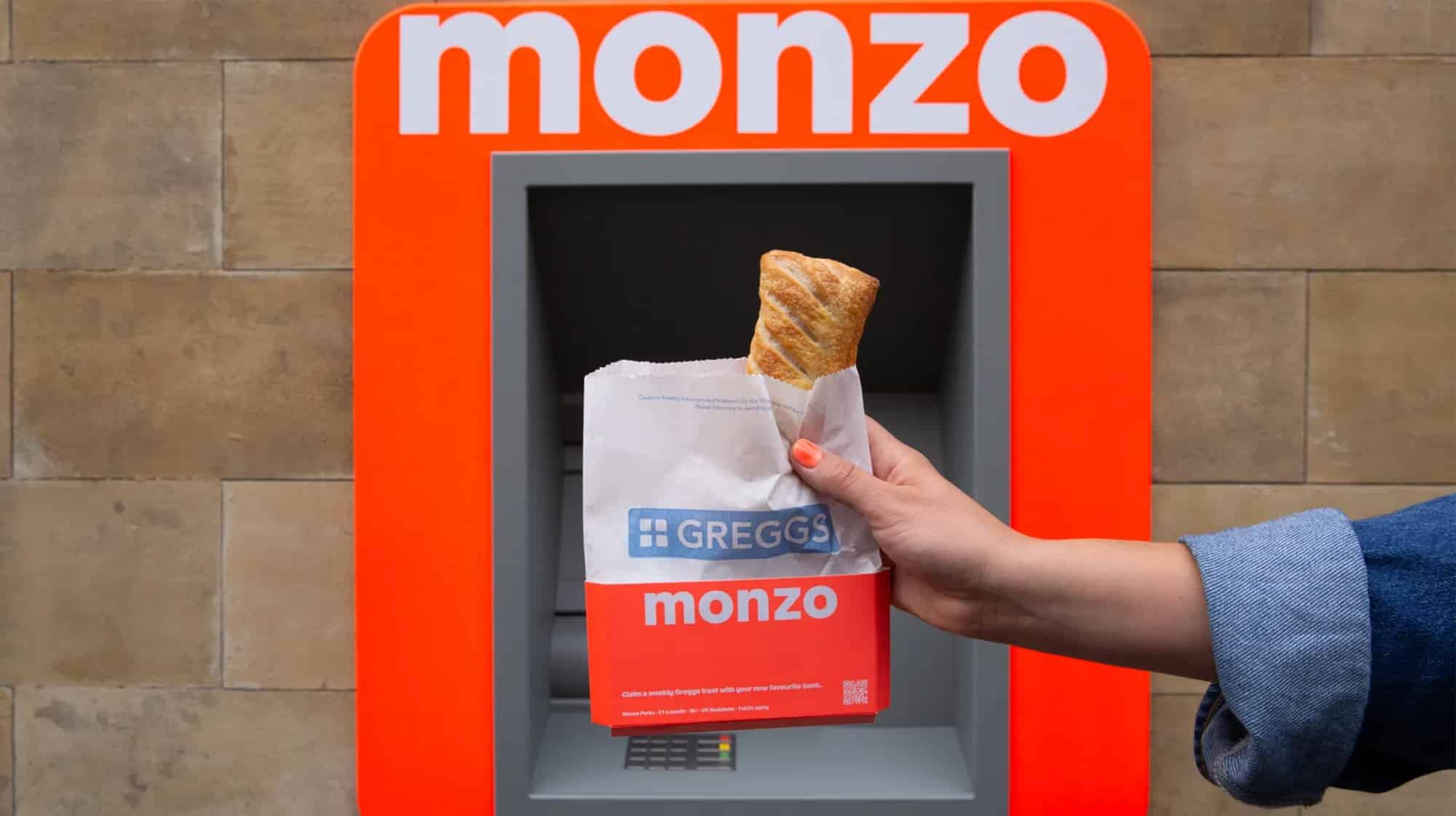
What it was: A hot coral ATM installed on Grainger Street in Newcastle – Greggs’ home city – that dispensed free sausage rolls instead of cash. No PIN required. Every 100th person got a £50 Greggs gift card.
How it worked: The activation grew directly out of real customer data: 2.3 million Monzo users had already spent over £70 million at Greggs in 2023, and 80,000 had claimed a free sausage roll through Monzo’s subscription perks since launch. Rather than just announcing the partnership, they built a physical moment around it that people could experience and film. TikTok videos of the stunt racked up 400,000+ views.
Why it worked: The partnership had genuine logic behind it – the data showed the overlap already existed. The ATM just made it visible and gave it a story worth sharing. It also shows how product sampling doesn’t have to be passive: giving someone a free sausage roll through a custom ATM is a fundamentally different experience to handing them one in a bag, and the mechanic itself becomes part of the brand memory.
British Heart Foundation – Stream of (Un)Consciousness (2024)
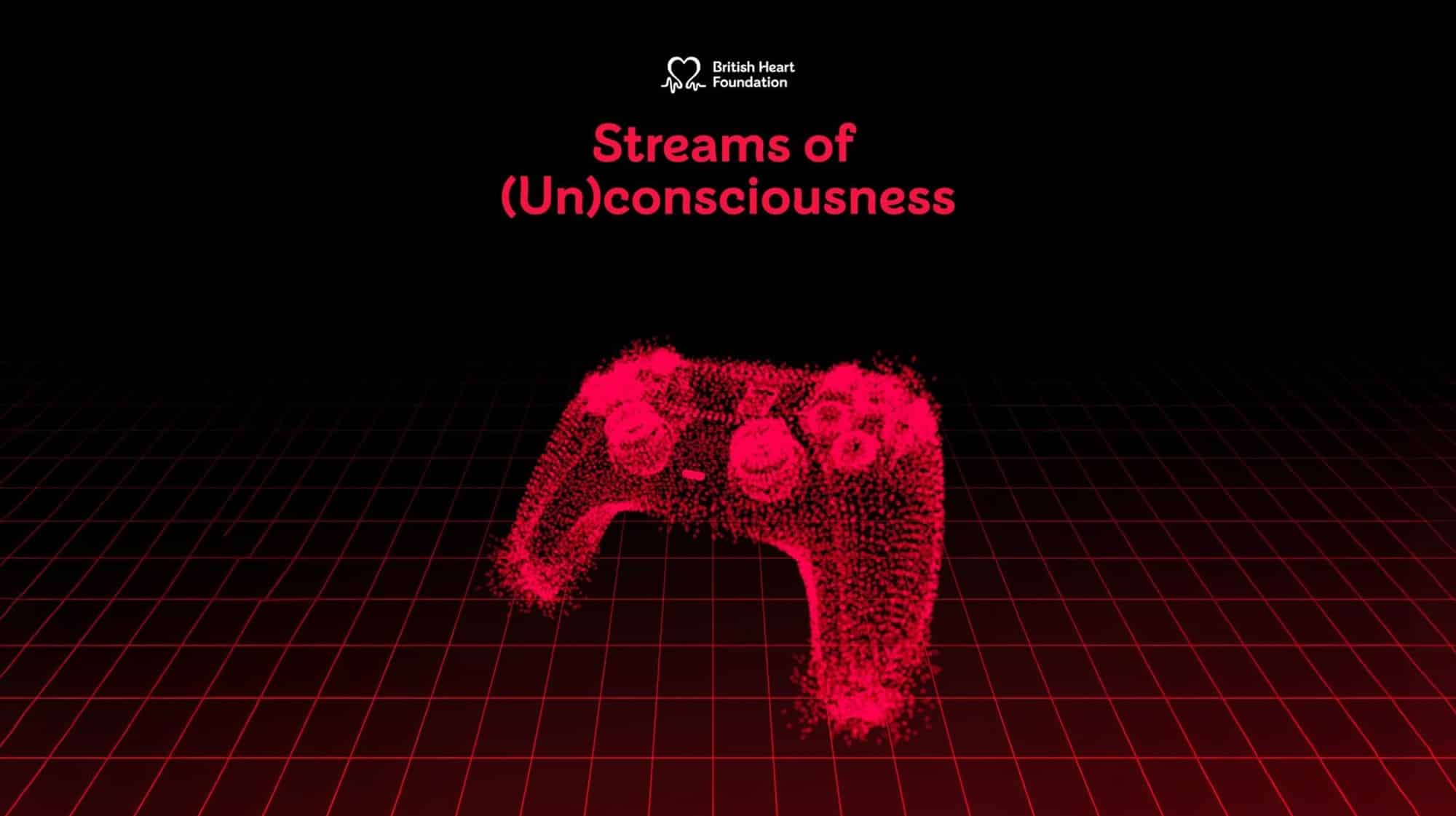
What it was: At exactly 5pm on 16 February 2024, the live Twitch streams of 14 popular gaming influencers – with a combined following of 11 million – were simultaneously interrupted by a flatlining heart monitor, followed by UK cardiac arrest statistics and a link to the BHF’s free RevivR CPR training.
How it worked: The BHF needed to reach Gen Z with CPR training. Rather than run pre-roll ads, they built an activation that mimicked the sudden, shocking nature of a cardiac arrest itself. Viewers genuinely didn’t know what was happening. The streamers then reappeared to explain their involvement, and many ran live CPR demonstrations.
The results: 714,620 viewers reached. Attention scores double those of YouTube pre-roll ads. 84% of surveyed viewers said they were very likely to complete CPR training. 3,000 additional people trained in the first month. And weeks after the campaign, one streamer’s follower revealed the CPR segment had saved the life of his two-year-old niece. The campaign won Marketing Week’s 2024 award for Best Use of Influencers.
Why it worked: The BHF didn’t ask which channels their audience used and then insert a standard ad. They asked where their audience actually lived and what would genuinely stop them in that moment. The answer was gaming, and the activation was built entirely around that insight. The format – the sudden flatline interrupting something people were absorbed in – was inseparable from the message.
So, what makes a brand activation work?
Looking across these examples, a few things stand out. The most effective brand activations:
- Are rooted in a genuine insight – about the audience, the product, or the brand
- Meet people where they already are, rather than demanding they come to you
- Create an experience that’s inherently worth sharing
- Feel like an expression of the brand, not a departure from it
- Give the audience something real – a product to try, a laugh, a skill, a moment
Brand activation isn’t a one-size-fits-all discipline. But whether you’re a challenger brand trying to break through or an established name looking to deepen your relationship with your audience, the core principle is the same: give people a reason to engage, and make that engagement worth their time.
How to plan your own brand activation
If you’re thinking about running a brand activation, here’s a practical framework to start from:
- Define your objective. What specifically are you trying to achieve? Trial, awareness, social buzz, sales uplift, data capture? Be precise – vague objectives produce vague results.
- Know your audience. Who exactly are you trying to reach, and where are they? The more specific your audience definition, the easier it is to choose the right format and channel.
- Choose your format. Match the type of activation to your goal and your audience. Sampling is ideal for trial. Experiential is ideal for brand affinity and social reach. Digital is ideal for scale.
- Set your KPIs before you start. Decide what success looks like and make sure your activation is designed to capture the relevant data.
- Build in amplification. The best activations have a life beyond the moment. Think about how your activation generates content, conversation, or data that extends its impact.
Review and iterate. What worked? What didn’t? The insight you gather from one activation makes the next one sharper.
Ready to activate your brand?
Relish is a UK product sampling and experiential marketing agency, specialising in beauty, FMCG, food and drink, and health and wellness. We help brands create activations that put their products into the hands of exactly the right consumers – and measure the impact.
Whether you’re launching a new product, looking to drive trial, or simply want your brand to mean more to more people, get in touch with the Relish team or call us on 01173751160.